Grade, Speed, Load, and Reaction Time… and What to do About Each
A tractor-trailer rollover makes headlines and blocks highways, but the conditions that produce one are rarely surprising in retrospect. Working US-199 semi recovery calls, we’ve seen enough of these scenes to know that the same variables keep appearing: grade, speed, load, and a driver without enough margin to correct. These factors don’t show up randomly, and understanding them gives drivers and carriers somewhere specific to focus before a run.
The rig, the road, and the driver each contribute, and when all three are in good shape, a tractor-trailer handles the demands of a run without incident. When any one of them is compromised, conditions that would otherwise be routine can push well past the trailer’s tipping threshold.
When Grade and Braking Work Against Each Other
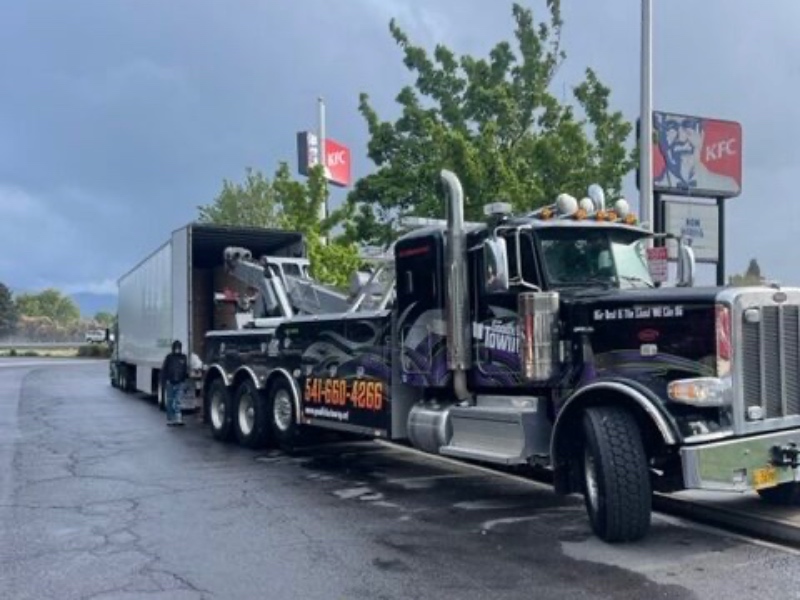
Mountain and hill country runs put different demands on a rig than flat highway. A loaded semi descending a long grade accumulates momentum that service brakes alone may struggle to control, and a driver who leans on them too heavily will overheat them. Brake fade removes the driver’s primary speed management tool at exactly the moment it’s needed. Then, the rig enters a curve or switchback carrying more speed than the situation allows.
Shifting down before a grade and holding a safe speed through it gives a driver control and options at the bottom; riding the service brakes down removes both. Proper downhill technique relies on engine braking and retarders to hold speed from the top of a descent, not to recover it after momentum has already built. This is one of the less-discussed contributors to rollover incidents and one of the most correctable.
Overloaded and Improperly Configured Loads
A trailer loaded above its rated capacity has a higher effective center of gravity than the equipment was designed to handle. This shrinks the tipping margin with every pound over the limit. Improperly configured loads add to that risk in ways that aren’t visible from the cab: weight shifted too far to one side, or concentrated at the rear, changes how the trailer responds to steering input. Drivers often don’t detect the problem until the rig is already behaving unpredictably. Load issues that originate at the shipper’s dock become the driver’s problem at highway speed.
Sudden Steering and Overcorrection
A driver who feels the rig drifting may make a sharp steering input to correct it. On a loaded semi, that sharp input shifts weight abruptly to one side of the trailer, and the resulting lateral force can start a tip. Overcorrection is especially common after a tire event or an unexpected lane drift, when the instinct to recover quickly overrides the approach that actually works. Smooth, deliberate inputs are what a loaded rig demands in any unstable situation.
Our Top Tips for Keeping a Rig Upright
The incidents we see in US-199 semi recovery work almost always involve at least one of these skipped under time pressure:
- Confirm brake adjustment at every pre-trip. Out-of-adjustment brakes create axle imbalance that shows up hardest on grades and in emergency stops.
- Use engine braking on any sustained descent before the service brakes are needed. But not as a substitute once they’ve overheated.
- Verify load configuration before departure. If the paperwork doesn’t match what you’re pulling, resolve it at the dock.
- Inspect tires at every fuel stop, not just at the start of a run. A pressure loss mid-trip changes handling in ways that raise rollover risk.
- Reduce speed progressively as grades increase, before momentum builds, not in response to it.
These are consistent habits that experienced drivers apply on every run, and that consistency is exactly what they rely on.
When US-199 Semi Recovery Is the Call, Goodfellas Towing Answers
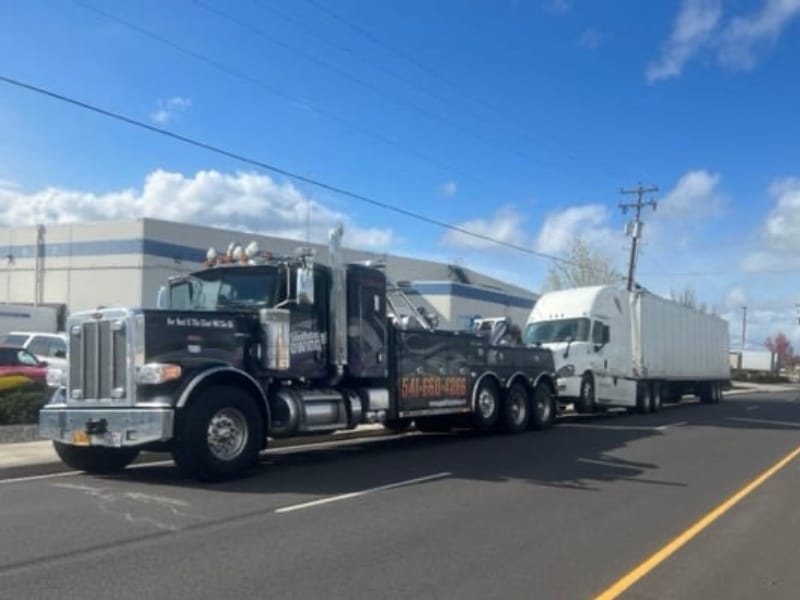
At Goodfellas Towing, US-199 semi recovery is a core part of our operation. Our heavy recovery fleet includes the rotators and rigging required for large commercial vehicles, and our US-199 semi recovery response handles everything from roadside mechanicals to full rollover scenes. We run US-199 semi recovery calls day and night because commercial traffic doesn’t stop and neither do we.
US-199 semi recovery means reading the scene carefully, protecting cargo when the situation allows, and coordinating with carriers and law enforcement to clear the road without creating new problems. Goodfellas Towing brings that to every call. When you need US-199 semi recovery, reach out and we’ll be there.
FAQ
What is the difference between a runaway truck ramp and standard braking for a loaded semi?
A runaway truck ramp is a last-resort safety feature designed for rigs that have already lost braking control. Standard braking technique using engine braking and retarders is how drivers avoid ever needing one. The ramp exists because brake fade is a known risk on grades, not a rare malfunction.
How does a shipper’s loading error create liability exposure for a driver?
A driver who accepts a load and signs off on it takes on responsibility for its transport regardless of how it was loaded. If an improperly loaded trailer contributes to a rollover, the driver’s signature on the bill of lading becomes part of the liability picture. Pre-departure load verification is as much a legal protection as it is a safety measure.
Can electronic stability control prevent a rollover completely?
Not completely. ESC systems respond to developing instability faster than most drivers can react, and they meaningfully reduce rollover rates on equipped trucks. But they have thresholds and limitations. A rig that enters a curve at extreme speed, or one with a severely misconfigured load, can exceed what any stability system can correct. ESC is a backup, not a substitute for proper speed and load management.
What should a driver do inside the cab if a rollover can’t be avoided?
The primary goal is staying in the cab. A driver who holds the steering wheel, keeps their seatbelt on, and braces away from the side of impact has a significantly better outcome than one who is ejected or thrown around inside the cab. Attempting to exit a tipping vehicle makes the situation worse. Staying belted and holding on is the correct response.
How do load securement regulations apply when cargo shifts mid-run?
Federal securement regulations require that cargo remain contained and immovable throughout transport. If cargo shifts and a driver continues without re-securing it, they are in violation even if the load appeared compliant at departure. Stopping to inspect and re-secure a shifted load after hard braking or a rough road section is both legal and correct practice.
What qualifies a towing company to handle commercial rollover recovery?
Commercial rollover recovery requires heavy rotator units rated for the load, trained operators who understand uprighting sequences, and experience coordinating multi-agency scenes. A company that handles only light-duty towing lacks the equipment and the procedural knowledge for a large commercial recovery. Carriers should vet their preferred tow provider before an incident, not during one.