Stopping at the First Wide Spot on the Shoulder
For our towing team, this is an all too familiar scenario: a driver coming down the Siskiyou grade north of the California line pulled over the second his oil pressure light flickered. He stopped on the inside shoulder, halfway through a curve, around two on a Tuesday afternoon. By the time we arrived, the Oregon State Police had shut down the slow lane. Calls like this make up a real chunk of our I-5 heavy towing work between Ashland and Grants Pass. The mountain stretches of I-5 in southern Oregon do not give a driver many places to stop. If a rig still moves, crawl another mile to the next pullout, exit, or wide flat shoulder if it is safer than the current spot.
Skipping the Triangles or Setting Them Too Soft
Reflective triangles are the cheapest piece of safety gear in the cab and the most ignored. We rolled up on a fuel issue where the driver had set one triangle, maybe sixty feet out. A logging truck nearly clipped him on the way past in heavy fog.
The right setup is one triangle ten feet behind the rig, one at one hundred feet, and one at two hundred feet. On a downgrade or a curve, the back triangle goes further out. Three minutes of work.
Trying to Patch the Truck on the Shoulder
Another scenario: A driver on a flat near Wolf Creek tried to swap a steer tire himself with a small bottle jack he had bought at a rest stop. He bent the wheel, lost a knuckle of skin, and still needed I-5 heavy towing for the recovery. Roadside repair on a class 8 truck is not a one person job.
We have shown up to loads with broken straps that drivers tried to re strap from inside the box, with the doors hanging open over a live lane. I-5 heavy towing crews carry winch lines and load bars rated for the weight of a full reefer.
Underestimating What a Mountain Recovery Looks Like
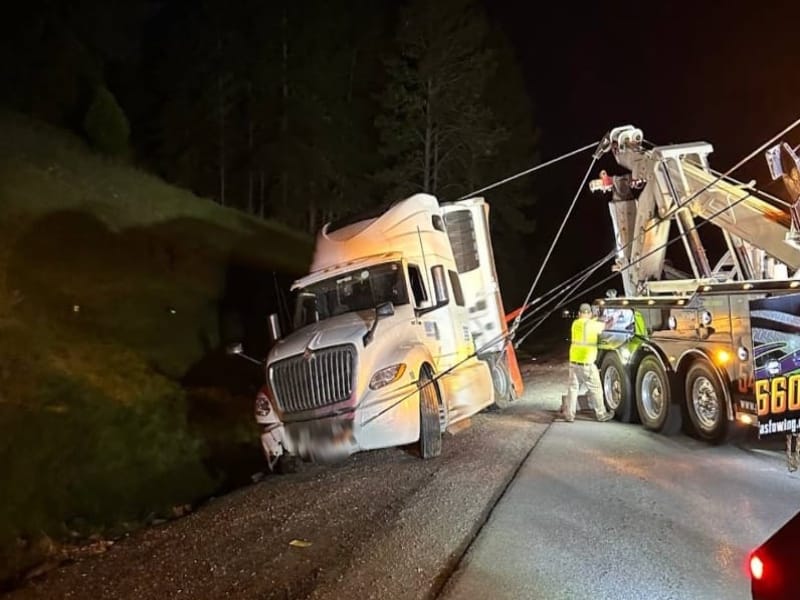
I-5 heavy towing calls in southern Oregon often run two to four hours from arrival to clear, especially in winter. Snow chains, black ice, and fog along the Siskiyou pass keep ODOT trucks moving slow. A recovery has to wait for traffic control before any heavy work starts.
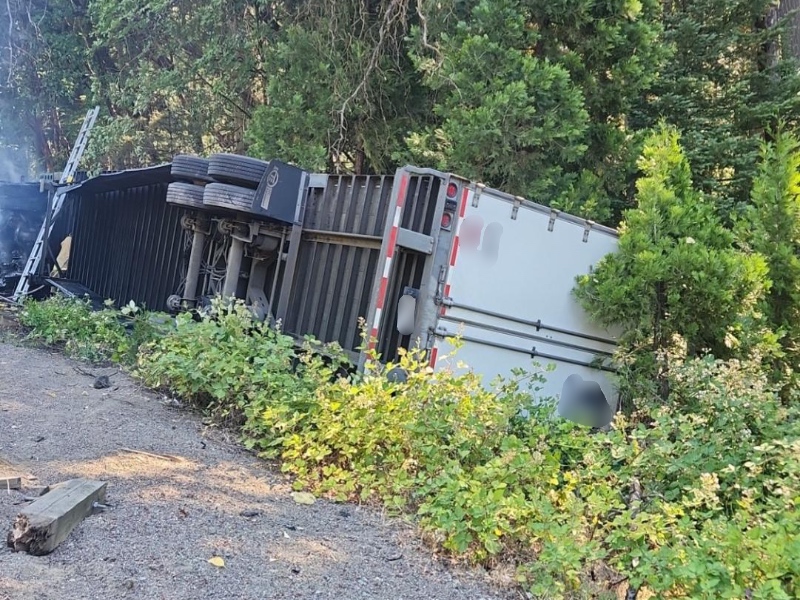
A simple winch out on dry pavement in summer might run an hour. A jackknife on a wet curve, a rollover with cargo spilled, or anything that needs a rotator runs three hours easy. Honest windows from the start protect the driver on I-5 heavy towing scenes.
How Goodfellas Towing Handles I-5 Heavy Towing Across Southern Oregon
We started Goodfellas in Grants Pass back in 2015 with one truck and a focus on the calls bigger fleets did not want. The I-5 corridor through Ashland, Grants Pass, and the Siskiyou pass became home turf, and our dispatch knows the exits and the spots where shoulders give out in winter.
For I-5 heavy towing along this stretch, the work runs from blown drive tires on loaded reefers to rollovers near the Sexton Mountain summit. We run heavy wreckers, rotators, and a service truck for fuel and mechanical issues. The call gets answered the way Tom Palazzolo would have wanted: fast, fair, and built to last.
FAQs
How long before I should expect a heavy duty tow truck on a major highway?
Response times vary based on traffic and distance, but most operators arrive within forty five minutes to ninety minutes once dispatched. Mountain passes and bad weather can push that out further. Calling a local heavy operator first usually beats a national motor club.
Can a tow company unload my trailer on the side of the road?
Some can, depending on the cargo and the situation. A full transload usually requires a second trailer, manpower, and a flat staging area. Loose pallets or shifted freight can sometimes be re secured on scene without unloading.
What if I cannot move my truck out of a traffic lane?
Stay in the cab if it is the safer option, turn on the four ways, and call 911 along with the heavy operator. Police can shut down the lane and protect the scene. Once help arrives, get out and stand on the side away from traffic.
Do I really need to chock the wheels?
Yes, especially on any incline or with any kind of brake issue. A rig can roll forward or back faster than most drivers expect, and chocks take ten seconds to set. Most fleet safety policies require chocks on any unscheduled stop.
Will my insurance cover a heavy tow?
Commercial truck insurance often covers towing as part of comprehensive or roadside coverage, but the limits matter. Many policies cap at one or two thousand dollars, which can fall short on a complex recovery. Check the declarations page before the next breakdown.
How do I avoid a citation after a roadside breakdown?
Set out triangles within ten minutes, log the stop in the ELD, and notify dispatch right away. Keep the four ways flashing and stay clear of moving traffic. Most enforcement officers are looking for clear effort to follow the rules.